

Di Sekitar Kita: Urban Biodiversity Challenge aims to identify and map habitats and biodiversity that we can find in Malaysian cities, especially those that may be “under the radar”, as well as unpacking preliminary insights into the norms, values, attitudes and perceptions of various stakeholders towards urban biodiversity.
Introduction
What are the parts of our world di sekitar kita that we notice as “Nature”?
Is it the thunderstorms we seek shelter from, or is it the trees we shelter under? What about the clay we mould into bricks, the ornamental plants that we nurture, or the silicon processors that drive our internet servers?
I’m driving in the rain, but I hardly notice “Nature”; I am enclosed in a climate controlled, wind protected, soundproofed box on four wheels powered by the death and decay of our ancestors. Each death sparks into life anew as it explodes another cylinder in my engine. I look out the window, and white painted lines blend with black asphalt blend with concrete sidewalks blend with old trees and weed grass and birds chirping.
I’ll admit that I struggle to notice the difference: what is Human and what is Nature? Or perhaps, why bother separating the two if we are all enclosed in death-powered boxes speeding to our next appointment?
I’m driving in the rain, and I simply follow the contours laid out by Man and by Nature, and try not to hit anything.

Transformation of Silica into Google Servers in Singapore
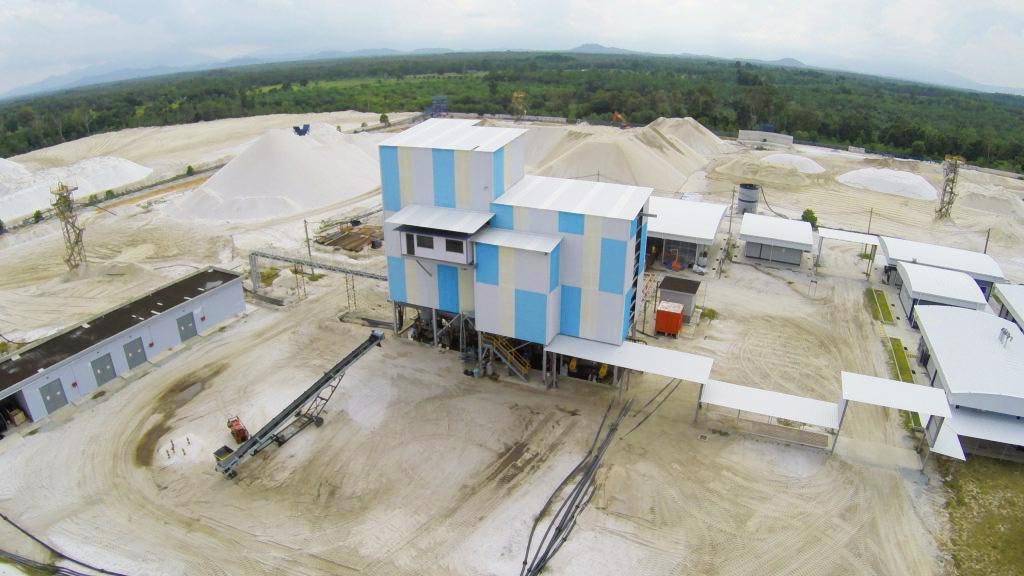
Transformation of leased-forestry into Silica in Terengganu
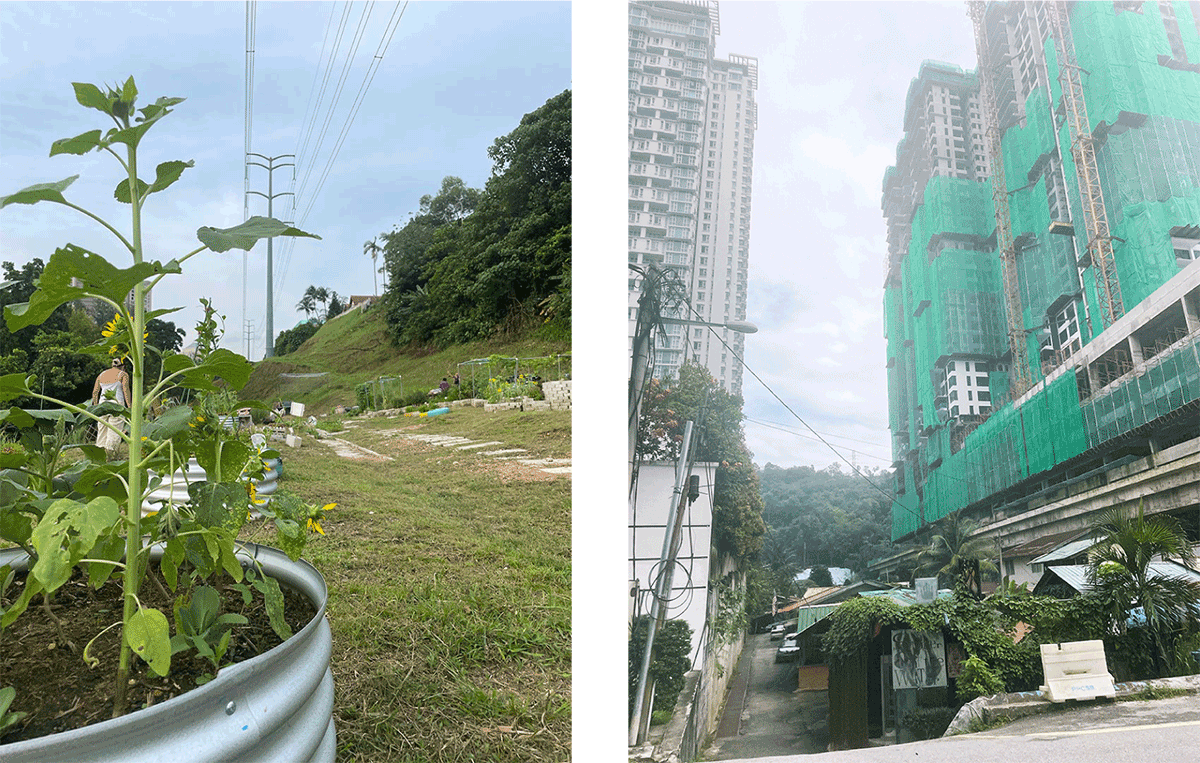
Left: Transformation of Transmission Tower lands into Kebun Komuniti Hartamas
Right: Transformation of Segambut into Mont Kiara
Mapping the Walk Ahead
As we move through these four photo essays about Urban Ecology, a fundamental question we will be addressing is: Why does nature matter? And more specifically, how does “Nature” matter to Malaysians in the city? Drawing upon four neighbourhoods in Kuala Lumpur, I hope to show the variety of existing ways Malaysians construct our world through different understandings of Nature.
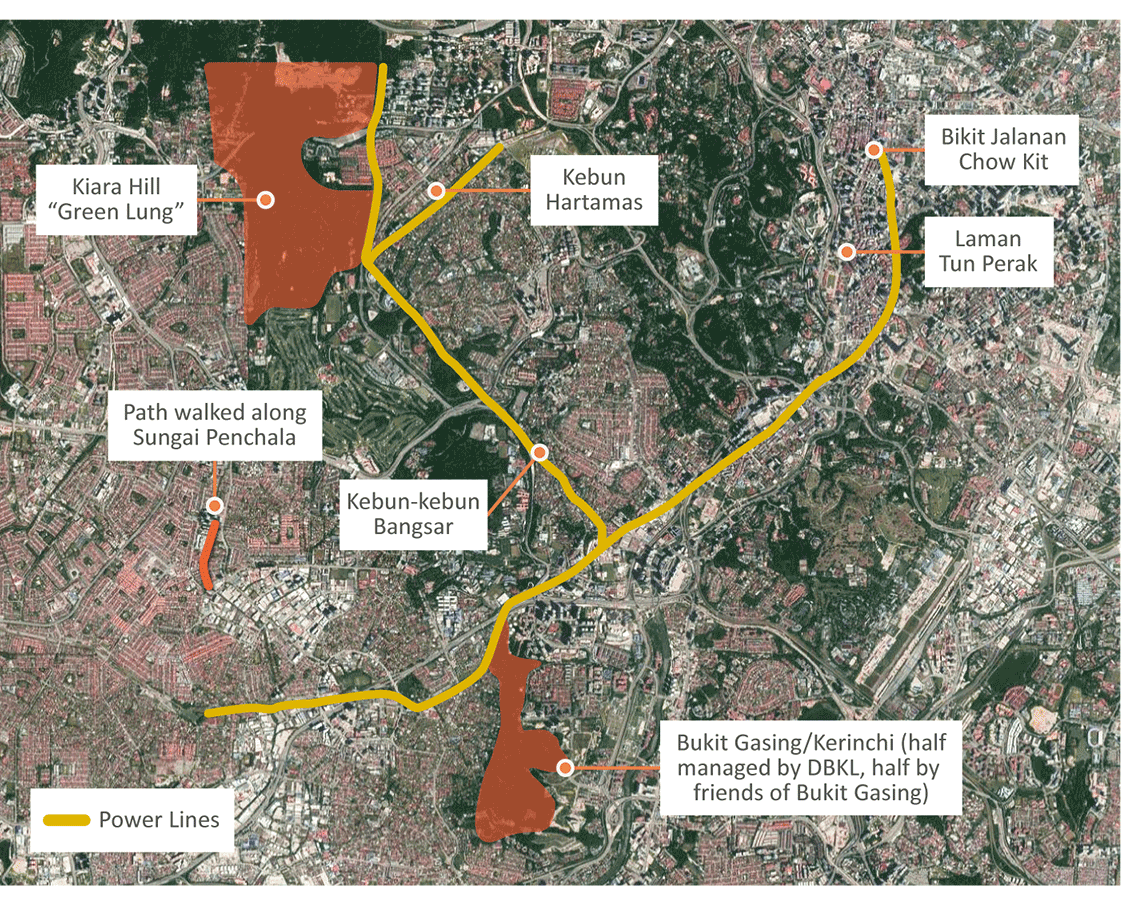
Considered (by some) the “most developed” city and model of future urbanisation in Malaysia, Kuala Lumpur is the primary site of fieldwork. The four neighbourhoods explored follow a trail of transmission tower lands that connect from Mont Kiara to Petaling Jaya. In the explorative spirit of this essay collection, this unorthodox trail was found and followed in hopes of finding something new.
For the everyday reader, I try my best to offer new ways to explore Nature in the backyard before you. What is your relationship with nature in your surroundings? As we approach irreversible climate doom, perhaps it is time to put aside hopes of reversal, and think about what we can salvage. What do we want to take forwards with us?
For the policy maker or urban planner, I provide empirical evidence of existing nature-based solutions to urban life. Different populations have different understandings of Human and Nature.
Close analysis of how these different understandings interact in a shared material space is a useful way to understand urban politics, ownership, and livelihoods. I also hope to prompt the urban planner: what is your relationship with nature in personal and professional life? How does that inform your policies? For design and implementation, a “bottom-up” approach that draws upon the existing practices and skillsets of Malaysians may be more successful at constructing the desired visions of “urban-biodiversity”.
This collection makes four key arguments:
read more
Chapter 1 begins in Mont Kiara / Segambut and Bukit Kiara. Pristine is the key feature we explore. In the greenery of Bukit Kiara, we find two symbiotic populations using the common Greenspace for distinct reasons. Exploring the people in Bukit Kiara against the backdrop of ongoing gazettement/development conflicts, I hope to open up this essay collection by demonstrating the danger of assuming Pristine nature.
read more
Chapter 2 moves Southwards to the wealthy suburb of Bangsar. Emptiness is the key feature we explore. Emptiness is found in lands of highest value and lands of lowest value. Contrasting Kebun-Kebun Bangsar’s public land reclamation alongside vacant residential lands held for investment, I continue with the opening framework of human-nature hybridity by questioning the social constructions of authentic “greenspaces”.
read more
Chapter 3 takes us through the streets of Chowkit, along the River of Life, and down to Dataran Merdeka. (Un)Control(ability) is the key feature we explore. At the heart of our independence, what thrives? In the Concrete Jungle, we find Overgrowth bursting the cracks of abandoned concrete, as we find overGrowth bursting the cracks of abandoned society. What is worth saving? Who is worth saving? The arteries of the city flow/grow with ever more fluidity, yet its dull heart thrums in rhythms apathetic.
read more
Chapter 4 follows the rivers and transmission towers out the city, and take us back down into residential PJ. Delineation is the key feature we explore. Exploring the split-management of Bukit Gasing shows how political demarcations alter nature. Whereas, in Sungai Penchala, we find an unruly Longkang that — in collaboration with humans — dreams of transgressing its concrete-delineated path, and become a river once again.
There is a common saying in Anthropology that ethnography serves “to make the strange familiar and the familiar strange”. These four essays are curated to weave between familiar and unfamiliar spaces, actors, and themes to help us think critically both about how we treat others and how we are treated.
As we walk together through these essays, I try to offer a glimpse of the emotions of hope, anger, surprise, loss, and wonder that we can find di sekitar kita.
For I have only begun to learn what we can learn.
Observer’s Notes
Literature Review
The literature that informs the ideas presented in this collection is inspired by works from far reaching areas. (There is also limited availability of environmental-ethnographies in the Malaysian context).
For layperson and enjoyable readability, I have chosen to significantly limit direct references to these texts and avoid getting overly academic; choosing rather to explore these concepts through descriptive stories of material space.
Mary Douglas’ well loved and ever relevant Purity and Danger (1966) informs much of this collection. The ambiguity of “dirt” and the desire for purification is a key concept in this ethnography. Douglas notes how pollution is always a moral matter. Purification is a recurring theme in how actors try to make sense of “wild” nature and “wild” people. This ethnography traces how we organise our physical and social worlds through the arrangements of human-nature. Douglas’ ideas feature heavily in all chapters.
Emma Marris’ Rumbunctious Garden (2013) and her Atlantic articles have provided much food for thought throughout the writing of this collection. Marris advocates for a post-Wild World, and delivers much optimism in a generally gloomy environmental space. She asks us to move forwards and create a “rambunctious garden,” a hybrid of wild nature and human management. You may find her most strongly present in Bukit Kiara and Sungai Penchala.
Anna Tsing’s Friction (2004) is also a key influencer. In Friction, Tsing asks us to think of the relationship between global/local, universal/particular, and abstract/practice as frictions. Like a tyre on asphalt, friction produces conflict and heat, but also enable acceleration (change in speed and/or direction). In this collection, Friction helps us think about the frictions between the abstract ideologies of “Greenspaces” and the practices of “Greenspaces”. You may find this most evident in my interpretations of Kebun-Kebun Bangsar and Laman Tun Perak.
Moving past deconstruction, Mosse’s Brokers and Translators (2006) and Tsing’s Mushrooms at the End of the World (2015) both offer a way to think about divergent interests and ideologies as assemblages. They help us find a way out of describing relations solely as conflicts. I draw on these ideas especially in describing the relations in Lalang Lands, Bukit Kiara, and Sungai Penchala.
You may also find sprinkles of James Scott’s Seeing Like A State (1998) and David Mosse’s Brokers and Translators (2006) again when I softly prompt for development interventions to be adaptive to unexpected (mis)interpretations of large modernist projects when attempting to scale. These ideas are most prevalent when describing modular placemaking efforts with ambitions to scale, such as Taman Kerinchi, Laman Tun Perak, and Kebun-kebun Bangsar.
¹ Such as, “When Conservationists Kill Lots (And Lots) Of Animals”, “The Nature You See In Documentaries Is Beautiful And False”, and “Inevitable Planetary Doom Has Been Exaggerated”
Chapter 1: Kiara Hill
Ecologies of Intertidal Zones
There is no pristine nature
Reflections
Gazettement assumes a Pristine Nature. Pristine Nature assumptions can occasionally lead to exclusionary “anti-human” conservation practices.
Sustainability is much more than about putting fences around Green things, it requires a supporting cast of human cultural and developmental ideologies around it.
There are many ways we use Greenspace. The value of a Greenspace extends far beyond the parcel of land it is on. There are plenty of cascading livelihood benefits, even in the city.
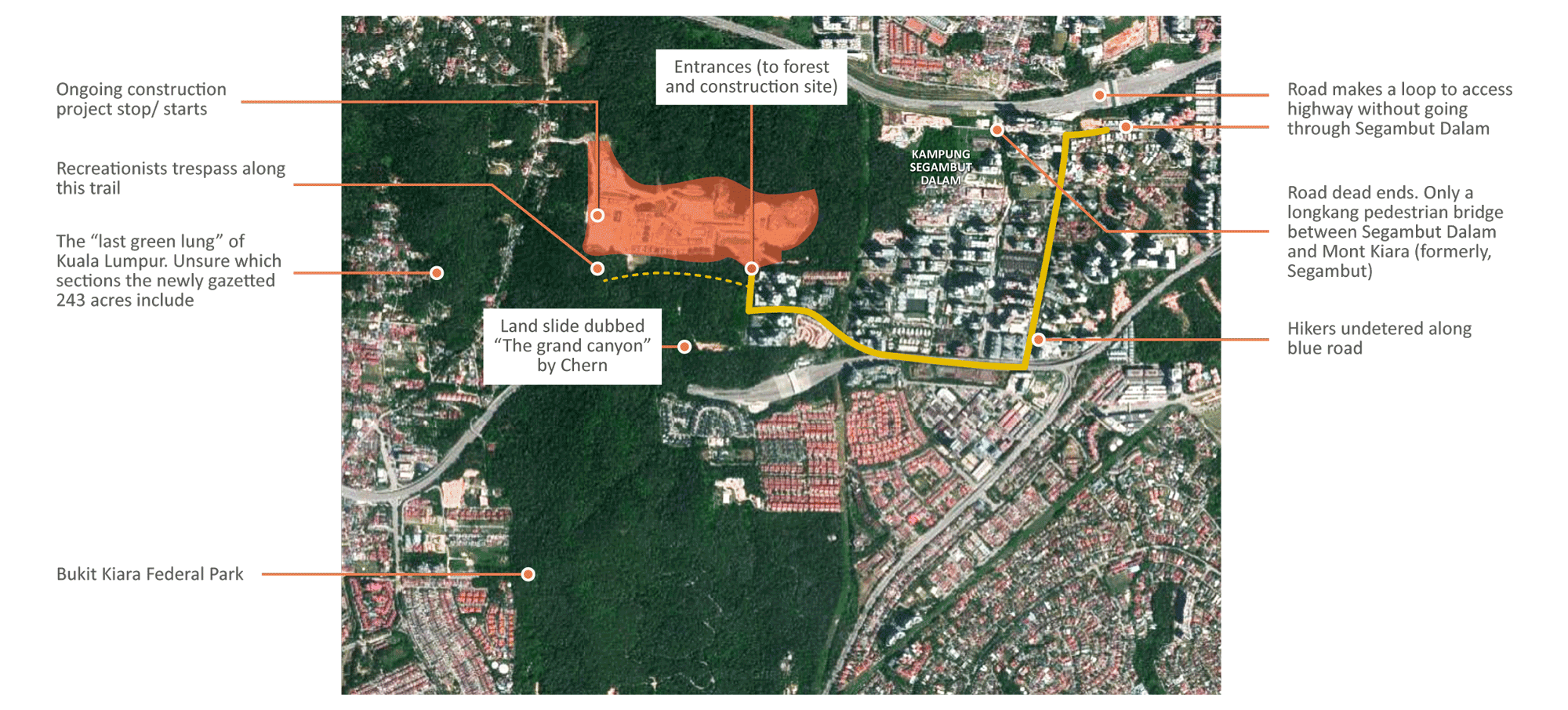
We begin at the development frontier of Mont Kiara and Segambut. I use the example of the “Last Green Lung” in Bukit Kiara to make the opening argument of this collection: there is no such thing as Pristine Nature in urban-biodiversity. The assumption of Pristine Nature narrows the possibilities of nature-based solutions in Kuala Lumpur, and can occasionally create unintended exclusionary effects on humans.
This chapter briefly outlines two transient populations in Mont Kiara/Segambut and Bukit Kiara. I introduce these two populations and their relationship with Bukit Kiara. I then provide a short history of (de)gazettement in Bukit Kiara. Finally, I close the chapter by discussing the tensions present in a traditional Conservationist approach.
Read full article here
Chapter 2: Bangsar
Ecologies of Emptiness
Green/Grey spaces do not always map onto sustainable/unsustainable spaces
Reflections
Green-city definitions (typically measured in “green” coverage) may miss opportunities for unconventional sustainable land practices.
Not all that is Green is sustainable. Not all that is Grey is unsustainable.
What are the boundaries of public/private agendas? There are opportunities for thinking of sustainable urban planning beyond public space.
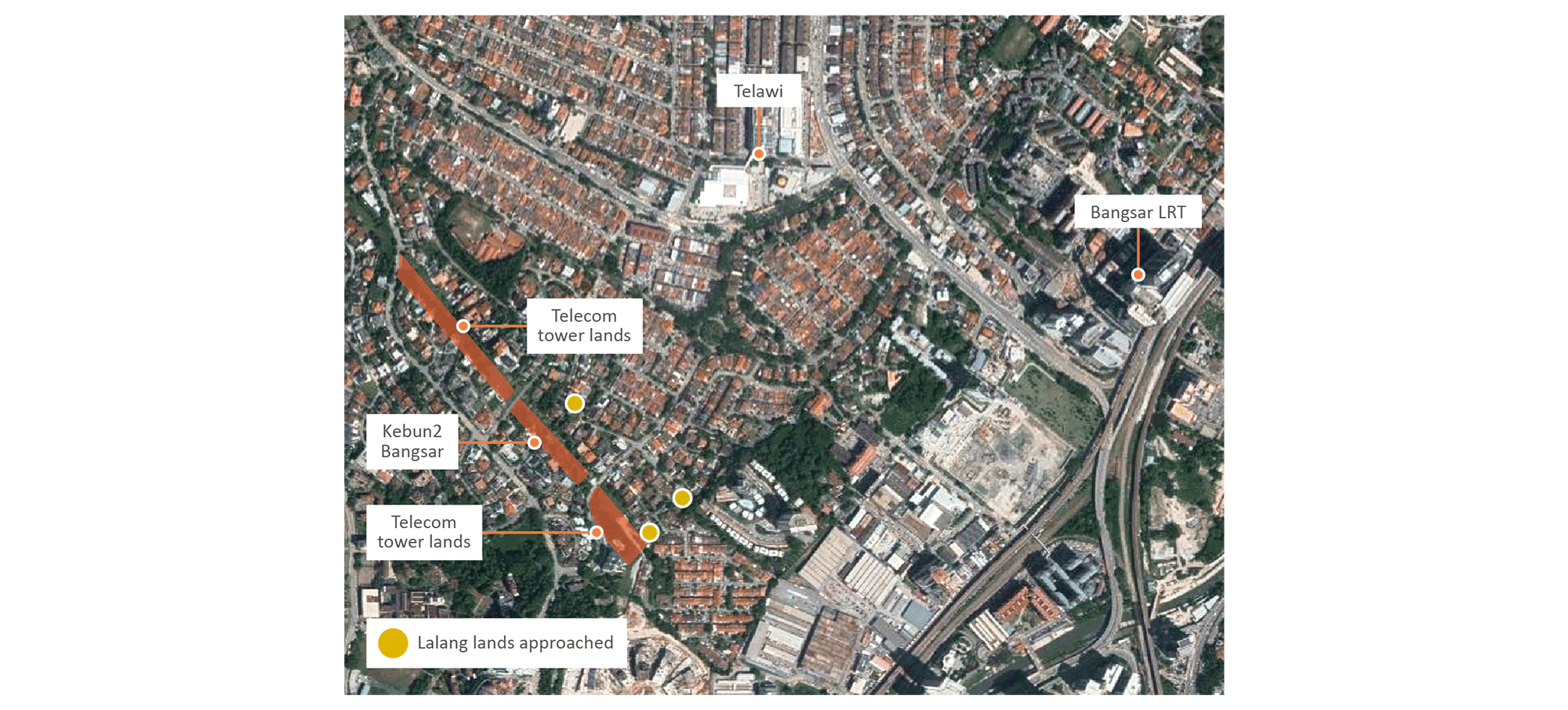
We move Southwards to the wealthy suburb of Bangsar. Property prices skyrocket, yet vacant lands abound. Economic theory predicts that in an efficient economy, Price increases with diminishing Supply or increasing Demand. If there is still supply of undeveloped lands, does this mean people are demanding vacant residential plots? Why?
I explore two types of vacant lands: public and private. I centre around (1) Kebun-Kebun Bangsar’s utopia of “upcycling” vacant TNB land into a food farm and (2) Vacant residential lands nestled between the bungalows of Bukit Pantai and Bukit Bandaraya. These two example approaches to vacant lands illustrate radically different understandings of land use centred around efficient use of Emptiness.
If chapter 1 argues that there is no Pristine Nature, this chapter observes two categorically “unpristine” natures in Kuala Lumpur, and provides thick description of the potentials and pitfalls of co-nurture. Exploration of Kebun-kebun Bangsar and Lalang Lands put forward some intended and unintended occurrences in Human-Nature relations. These two different types of land uses in this same neighbourhood illustrate how Green/Grey spaces do not always map onto Sustainable/Unsustainable spaces. Furthermore, human desires and logics — whether land ownership legalities, imaginations of ideal human-nature relations, or market logics — will always structure the shapes and sustainability of our “Greenspaces”.
Read full article here
Chapter 3: Downtown
Ecologies of Concrete Jungles
Nature conquers humans too. Just leaving Nature to be “wild” can disrupt lifestyles, while active Greening projects can be operationalised for exclusionary practices.
Reflections
Develop a Green framework without the underlying assumption that Nature is the only things that needs saving.
Planning needs to recognise the uncontrollabilities of execution.
Not all public space is made for the public.
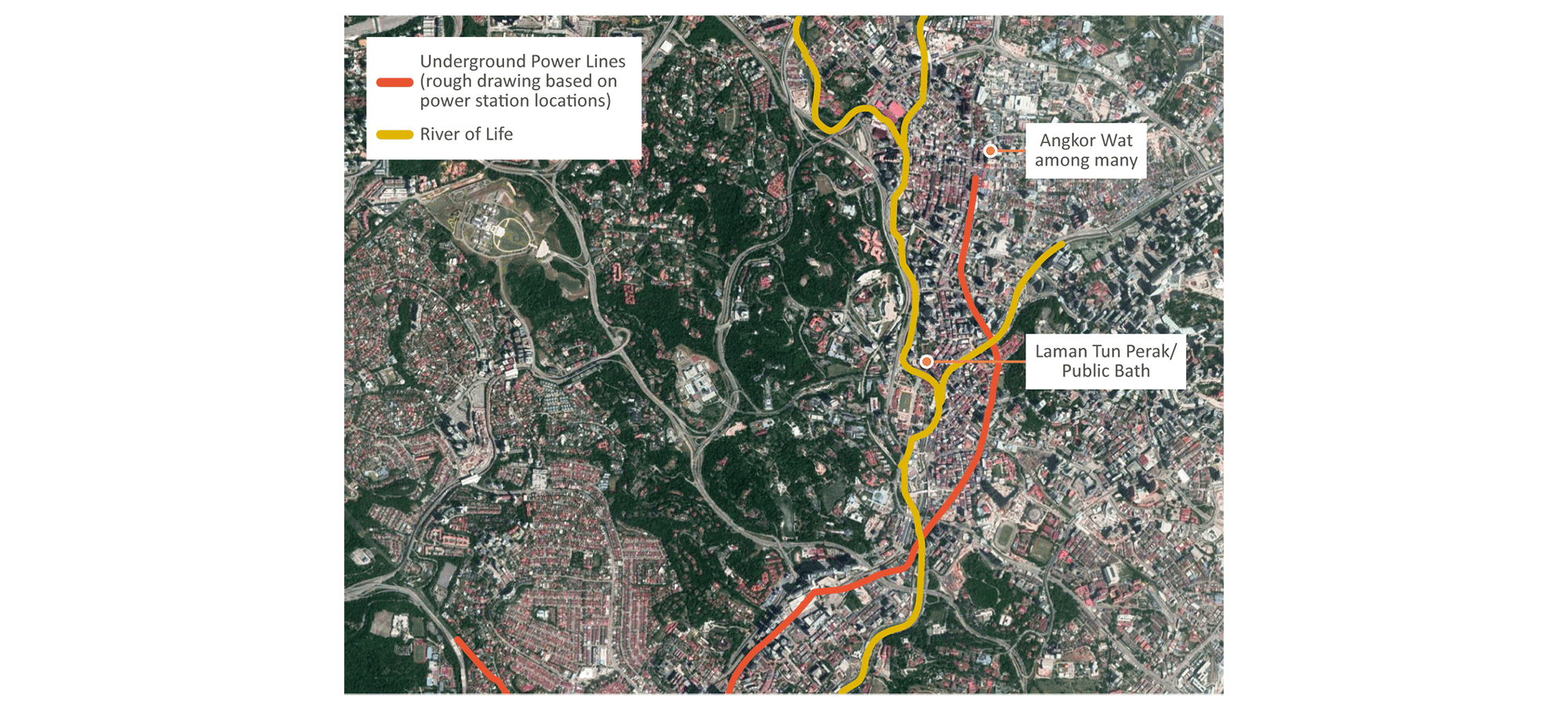
This chapter centres around (un)control(ability). Power lines move underground as we move into the city, and become harder to trace. If the previous essays touch on visible interventions to manage and control Humans and Nature, this chapter reads non-intervention (or abandonment) as a specific form of management. In the two sites observed for this essay, abandonment can simultaneously reflect the limits of human control and specific practices exclusion.
This chapter opens with a brief vignette about Nature overgrown upon abandoned buildings. It then explore the concept of enclosure through those who are trapped at home, and those who are trapped outside. These narratives occur over the backdrop of ThinkCity greening projects. Finally, I centre down to ThinkCity’s first project and its relationship with wild nature and wild humans.
Read full article here
Chapter 4: Petaling Jaya
Ecologies of Hutan/Taman, Sungai/Longkang
Instead of delineating Human and Nature, the more meaningful question when you assess a (green) space is: which humans are empowered to order their environment? Which humans are excluded?

Reflections
Material design of natural spaces reflect and reinforce specific types of relationships we have with Nature. It is worth considering whose cultural ideologies we are reinforcing.
But this power over space is not total. People will always defy design with their own interpretations and transformations of space. Instead of punishing transgression, a bottom up approach to working with nature requires us to work with humans. Interventions must all be grounded in the physical and social realities of a context.
Urban-Biodiversity is much more than about being “Green”; it is also about housing a multiplicity of human-natures and human natures.
Chapter 4 continues to follow these Transmission Towers south and westwards. It takes us along the edges of Bukit Gasing, past Tasik Taman Jaya, and across Sungai Penchala. Following these power lines inform us of the powers that de-line-ates the boundaries of space and the boundaries of category: hutan/taman, sungai/longkang
In this chapter, I want to help us draw attention to management of space. Hutan/Taman uses the layout of Bukit Gasing to tell us about the humans that manage it. It draws attention to political demarcations of the power to manage top-down. Sungai/Longkang reapplies this method, but follows how residents and a river transgress such attempts to manage their relationship. It adds nuance to this conversation about power to show how localised community cooperations still hold power to transform their surroundings, and produce unlikely sustainable ways forward.
Read full article here
Conclusion: Ecologies of Salvage
Don’t Deny the Dodo
What does this ethnography offer beyond pretty prose and meandering meanings? Ethnography encourages us to look at reality on reality’s terms.
This final chapter centres around Salvage. Why salvage over mainstream synonyms like restore, recreate, or regenerate? Re- begins with an imagination of desired reality, then acts to bring desire into fruition.
Salvage begins with what is in front of us. It acknowledges the loss that has occurred, and acts to work with what is given. It is neither disillusionment nor denial; it is acceptance. The material space of Kuala Lumpur is not solely the imaginative creation of urban planners and policy makers, but manifests through a vast cast of actors — recreationists and squatters, volunteers and gardeners, stray dogs and wild weeds, those trapped in houses and those trapped out of houses, state authorities and Friends, a longkang’s contents and discontents.
Any effort to create the utopian green cities of urban-biodiversity must work with the diversity ecology of human-natures and human natures in this city. Through this, we may salvage the unexpected.
Perhaps this Order must embody someone/
something once marked undesirable.
Disorder accepts what is becoming
weeds to salvage wastelands arable.
Although I have used guiding terms such as pristine, emptiness, control, delineation and have claimed to make four key arguments about Human-Nature, the beauty of an ethnography is in it’s world building. I shy from giving prescriptive definitions, because you do not need my understanding of these terms or arguments, you need yours. Reimagination of space is a creative art that must be negotiated within context; it is an improvised dance between human(s) and nature(s).
To read this ethnography is to perform your own ethnography: I encourage you to notice and draw connections between the arrangements of words, themes, and images; just as I was encouraged to notice and draw connections between the arrangements of human-nature. If we brush the same stinging weeds against our shins, feel the same smooth bark of a fig tree, or dip into the same longkang waters, then you have an understanding that we now share.
Thank you for walking with me through the spaces explored within these pages.
Summary
This collection makes four key arguments:
- There is no Pristine Nature.
- Green/Grey spaces do not always map onto sustainable/unsustainable spaces.
- Nature conquers Humans too.
- Urban-Biodiversity is much more than about being “Green”; it can house a multiplicity of human desires and lifestyles.
The broad arc of this ethnographic collection follows power lines across Kuala Lumpur. Pristine in Segambut/Mont Kiara and Bukit Kiara suggests dangers of assuming Pristine Nature. Emptiness in Bangsar builds on this by exploring a green space and a grey space (or nature/human) through the lens of hybridity. In Chow Kit and Chinatown, (un)Control(ability) encourages us to let go of modernist fantasies for top-down centralised control, and learn to shift our feet with shifting paths. Finally, Delineation in Petaling Jaya shows us that how we work with these shifting possibilities of human-nature can offer us a hopeful path ahead.
Conclusion
The tensions between Growth and Degrowth is captured in the UN’s decade of ecosystem restoration. It aims to “Prevent, Halt, and Reverse the Degradation of Ecosystems Worldwide”. I hope this collection of essays has provided you the tools to look around your surroundings and ask:
What exactly should we be “preventing”; is it small holder farms and workers squatters, or large scale eco-hospitals and eco-residences?
How do we “halt” degradation? The mobilising process requires collaboration and contestations from many many parties who understand “degradation” very differently.
Pristine Nature is symbolically powerful for persuading a common vision for the future, but how does it translate to the ground. What does viable, accessible, and realistic “reversal” look like?
The Urban Biodiversity Frontier Challenge launched on the UNDP website with the short essay: “Don’t Deny the Dodo”. There, we find new possibility by salvaging from the assemblage of family, nostalgia, material space, and ideological fantasies available in my childhood home. This collection of essays is written in the same spirit: there is much to be said for walking off the beaten path, but we must never neglect the paths we already beat down.
Lest we end up merely paving more of the world over.
